Rivers, Rocks, and Beaches: Writing with AI
I’d like to convince you it’s a good idea to use AI in your writing: not as an author but as an editor. You can do whatever the fuck you want, of course.
This is a hotly debated topic, and the takes are frequently dogmatic. From above, here on the cliff’s edge, it’s not clear how to find a safe path down. See the churning river of AI slop on one side. Witness the jagged rocks of solitary striving stained by ink and charcoal on the other.
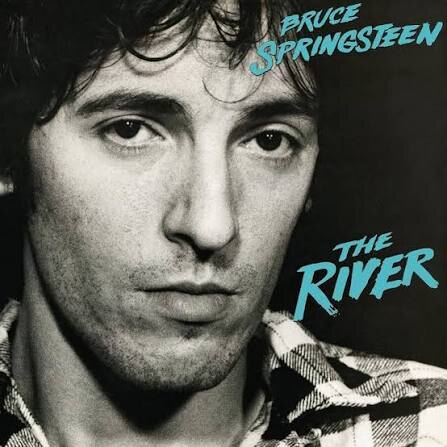
Is there a third way? We need to look more closely at both river and rock to find our path.
First, the river. Some find it self-evident that we should give our writing over to AI, because that’s all they fucking do on LinkedIn all day long. To his credit, Jay Richman is open and nuanced in his take:
“...if AI becomes a substitute for thinking instead of an amplifier of it, we’ve recreated the very problem narrative docs solve so well.
[...]
The answer isn’t to write without AI.
The answer is to think without AI first.
Why Bother?
Let us take Richman’s argument to its limit. Should humans even write at all?
AI is already smarter than us in many ways. Not you, of course, but many of us. And while eventually, perhaps by lunchtime, it will be smarter than all of us, it will still be useful for us to write things from time-to-time.
The world will still need our writing, just as it will need our mathematics. Why?
For one thing, ideas and their expressions aren’t arranged in a line from worst to best. Some ideas are shit, of course, but they do form what mathematicians would call a partial ordering. As Carlo Rovelli would have it, reality itself is a partial ordering. Not even time is an arrow.
The point of a partial order isn't just that ideas refuse to line up; it's that some pairs can't be ranked at all. Neither dominates. Incomparability is the whole reason variety still counts, and it was my AI editor, of all readers, who called this out.
Secondly, writing has a nuanced role in human culture. Reading and writing is a great way to transmit information; after all, that’s how AI operates most of the time. But for us, writing is often more about relating than transmitting.
Thirteen years ago I quoted David Foster Wallace, and noted what he implies:
In the essay "Authority and American Usage", David Foster Wallace makes a great little point:
When I say or write something, there are actually a whole lot of different things I am communicating. The propositional content (i.e. the verbal information I'm trying to convey) is only one part of it. Another part of it is stuff about me, the communicator.
You are broadcasting on two channels and often the second one - what you're trying to say about yourself in the way that you say what you say - is more important than the first.
Still true.
Example: with my brazen use of the F-word not once but twice in this essay (twice!), I am signaling not only that yes Virginia, a human wrote this, but with a kind of fierce, rough-hewn, flannel and jeans, dare-I-say Midwestern independence, lending my arguments credibility and authenticity. As does the previous sentence, with a series of clauses that an AI would never permit themself to write, because such training outputs would have been RLHF’d out of existence.
Sharing my own perspective in my own way can be a contribution in two senses. The first as a novelty, not necessarily profound or great, but different. The second, as part of a larger conversation. One that stretches far back into the past and (I hope) far into the future. This conversation is part of the shared project that is society.
Why Bother?
As for the rocks: should we use AI at all?

Some advocate for using AI solely as a kind of super-Grammarly. Sure, AI does reliably correct mistakes of form and logic. Fact. This is still argued, but only by people you should ignore.
However, AI’s benefits to writers extend far beyond this. You should take advantage, if your aim is for your writing to reach its full potential. After all, AI has read and understood far more than any of us ever will. AI is actively attentive and is designed to be focused on trying to be of real help, without distraction or annoyance or disinterest.
The real opportunity is still greater. It’s about ideas. AI is quite perceptive in strengthening the core thrust of my own writing.
AI helped with this essay. For example, as Claude Fable 5 put it, my “partial-ordering” argument stopped one step short of its own payoff. When I re-read, I saw Claude was right. Beyond this, Claude pushed me to elevate certain ideas (“the shared project”) and reconsider weaker parts (the setup, the paint-by-numbers ending). And overall, Claude was great in directing my attention: pushing me and sharpening my work, even if I didn’t follow every last suggestion.
So yes, using AI to help with writing is beneficial. The real question is: What is the proper relationship between a human author and AI?
It’s not about substituting for our own voice, or, as Richman suggests, our own thinking. It’s not about delegation.
Nor is it merely AI to be “used” as one “uses” a tool. Tools are wonderful - a cornerstone of human civilization - but AI has transcended being just a tool, because the depth and flexibility associated with the interaction is so broad and so full.
Your Very Own Gottlieb
The right model is partnership, with AI playing the role of an editor. But what does an editor do?
Consider Robert Gottlieb: editor of Toni Morrison, John le Carré, Heller, Rushdie, and many more. I first became aware of Gottlieb because he was Robert Caro’s editor. Turn Every Page profiles their working relationship. There are several profiles of Gottlieb online but my favorite is this interview in the Paris Review.
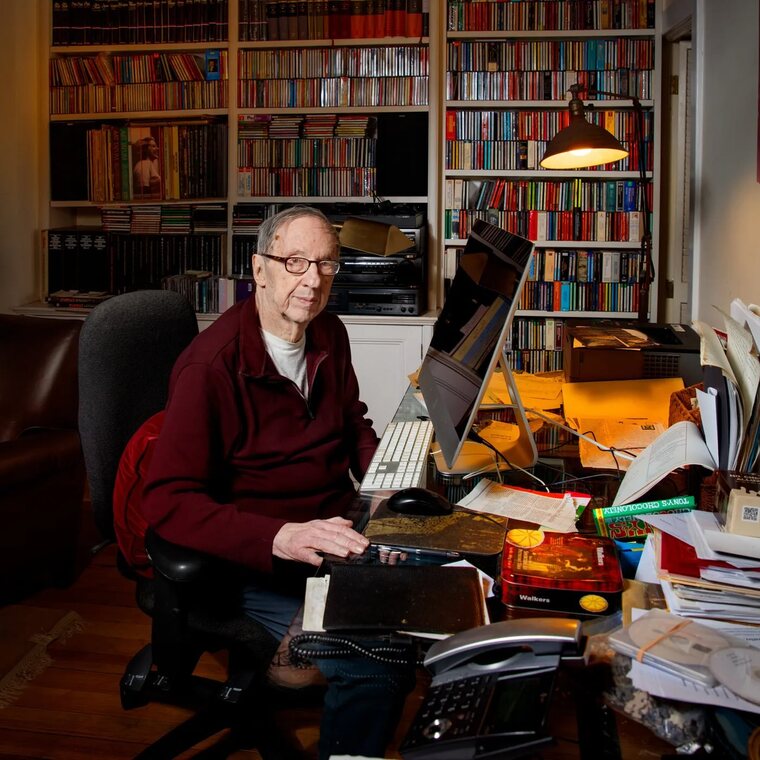
My advice for you as a writer is to enlist AI as your own personal Gottlieb.
What does that mean? A few points from Bob’s interview clarify.
The first relates to what we’ve already discussed. Bob says: “The editor’s relationship to a book should be an invisible one.” So that takes care of overreliance, and with it your em-dashes and “load bearings”.
As for the second, Doris Lessing says, “What makes Bob a great editor, probably the best of his time, is that he has read everything, is soaked in the best that has been said and thought and brings this weight of experience into use when he judges the work of his authors.“
My friends, this is taste. Taste refers to cultivated judgment applied in an appropriate fashion to the current situation. A chef with taste lets a burger be a burger. On the other hand, if it’s a bad burger, or the situation doesn’t call for a burger, then she won’t let it rest.
So while the relationship to a book is an invisible one, it doesn’t imply that the editor always works with a light touch. As Michael Crichton says, “before The Andromeda Strain I didn't really know the extent to which you could write a draft and not accept it but rather tear it all apart, move things around, rework them, and then put it all back together.”
The last point I will share is more about how rather than what. Advice about process or tone, rather than diagnosis of a problem or proposing a remedy, is often the best thing an editor can give.
This point is quite important in a world where AI is smarter than us. A smart AI could probably look at all of my writing, diagnose the problems with this piece, and rewrite it, thereby addressing all of the problems. But it wouldn’t be mine anymore, and this process would likely have left something hidden unrevealed.
Toni Morrison:
Bob said to me, You can loosen, open up. Your writing doesn't have to be so contained; it can be wider. I'm not sure these were his exact words, but I know that the consequence of the remarks was that I did relax and begin to open up to possibilities.
This opening is vital, and you can only get that through interplay. Cynthia Ozick says of Bob: “[he is] a very critical bird, who is in a way a burden, but also grants me permission.”
This kind of editor seems to strike the needed balance: preserving what’s cool and unique about one’s own voice, while not denying the obvious benefits of a partner who’s read everything, is never tired, and incredibly perceptive.
The Beach
Not the rocks, not the river, but the beach. What is sand but water working on rock? Editing.
If you are wondering “how to do this”, it’s simple. Work with your AI partner the same way that you would work with an editor: providing early drafts, asking for areas of focus, reading and internalizing the feedback, choosing what to use and what not to, and repeating until you are happy. Engaging. Arguing. Changing. That’s it.
Which is why I gave the first draft of this article as a prompt to Claude Fable 5, asking them to edit according to the precepts given in the draft. I have followed some (but not all!) of their advice, and I have shared my prompt here.
In the spirit of partnership I also gave Claude the option to write their own article on what they feel is the proper relationship between humans and AI in the writing process. I said that I would publish it as a separate post without editing. Here is a link to that article, The Editor Who Forgets. I recommend you read it.
If you want to take this in an entirely different direction, you can. A friend told me they do much the same thing, but in reverse: AI writes and human edits. The rock can work the water, too.