Book Review: Unreasonable Hospitality
"Unreasonable Hospitality" by Will Guidara is one of the very few books on leadership I will remember five years from now, and not because I am losing my marbles. The tagline is “the remarkable power of giving people more than they expect”. Honestly, ignore that: the message is bigger. Most management and leadership books are poor substitutes for the school of hard knocks.
Management books have the challenge of beating lived experience, and therefore my bar gets higher with every passing year. Most don’t meet it.
Do you want me to spill tea on management books? Happy to. In Search of Excellence is steeped in its decade (the 80s): brassy, confident, imperious, impersonal. Good to Great is millennium survivorship bias washed in sophistry. Most of the others I can’t even remember.
Unreasonable Hospitality is different because it is the story of a quest. Quests are fun. Quests are inspiring. Will Guidara ran the popular Eleven Madison Park (EMP) in partnership with Daniel Humm, and their quest was to make EMP the #1 restaurant in the world. The goal is excellence and the journey is filled with tales of a world completely alien to me. Guidara makes this strange world familiar through the specific and personal nature of the anecdotes.
I will touch on two themes of Unreasonable Hospitality that I particularly enjoyed: details and nonduality.
Guidara says that details matter, and obsessing over them plays a pivotal role in EMP’s success. Getting the details right only happens with intention: "intention means every decision, from the most obviously significant to the seemingly mundane, matters." As John Wooden said, “The way you do one thing is the way you do everything.”
But do all the details matter? All of them? Isn't this obviously bullshit? Isn't it true that what matters most, by definition, are the big things? Why not just focus on those?
Guidara says intention matters because it involves "clear purpose and an eye on the desired result". When you set a goal, it is by definition unrealized and by definition abstract. You don't know what it is and what it feels like. It’s not real.
Intention is what forms and clarifies purpose, step by step, bit by bit. When we have intention with each decision, we learn not only what it takes to achieve a result, but also the nature of the result itself. Intention matters whether or not anyone else is watching, because you are always watching yourself. This is important because as Feynman said, you are the easiest person to fool. Attending to details is tiptoeing around the chasm of self-delusion.
Guidara asserts that you can never really reach your end goals unless you are serious about each decision along the way. Not just because of the intrinsic value of the decision (e.g. how to fold a napkin: who gives a shit?) but because of the directedness it brings back to the ultimate goal.
Guidara inspires me to care about details by turning them into microcosms.
Guidara does not put it this way, but for me an important second theme in Unreasonable Hospitality is nonduality: a rejection of the “either / or”.
Early in the narrative Guidara talks about two kinds of “smart”: restaurant smart, and corporate smart. Restaurant smart companies “have more autonomy and creative latitude. Because they tend to feel a greater sense of ownership, they give more of themselves to the job.” Corporate smart companies have “back-end systems and controls that are needed to make them great businesses.” This framing seems to imply a battle between creativity and control. Guidara is able to find balance through compromise, for example via the “95/5” rule: “manage 95 percent of your business down to the penny; spend the last 5 percent ‘foolishly’.”
Later on, EMP wrestles with trying to do it all: precision in service (the “one inch rule”) while retaining spontaneity. Cost controls while leaning into the unique and memorable. Conflicting goals would seem to lead to choices and compromise, and they do, but not necessarily at the expense of the goals themselves.
I believe in having conflicting goals. So does Guidara. So does Amazon! At Amazon, teams are encouraged to write down their tenets: key beliefs that teams can use to guide decision making in times of ambiguity or disagreement. Critically, tenets must not be obvious: they actually need to rule out one course of action over another. They are not platitudes. They are also encouraged to embody a kind of internal tension: statements that seem self-contradictory. As Rory Sutherland said, the opposite of a good idea is (sometimes) a good idea.
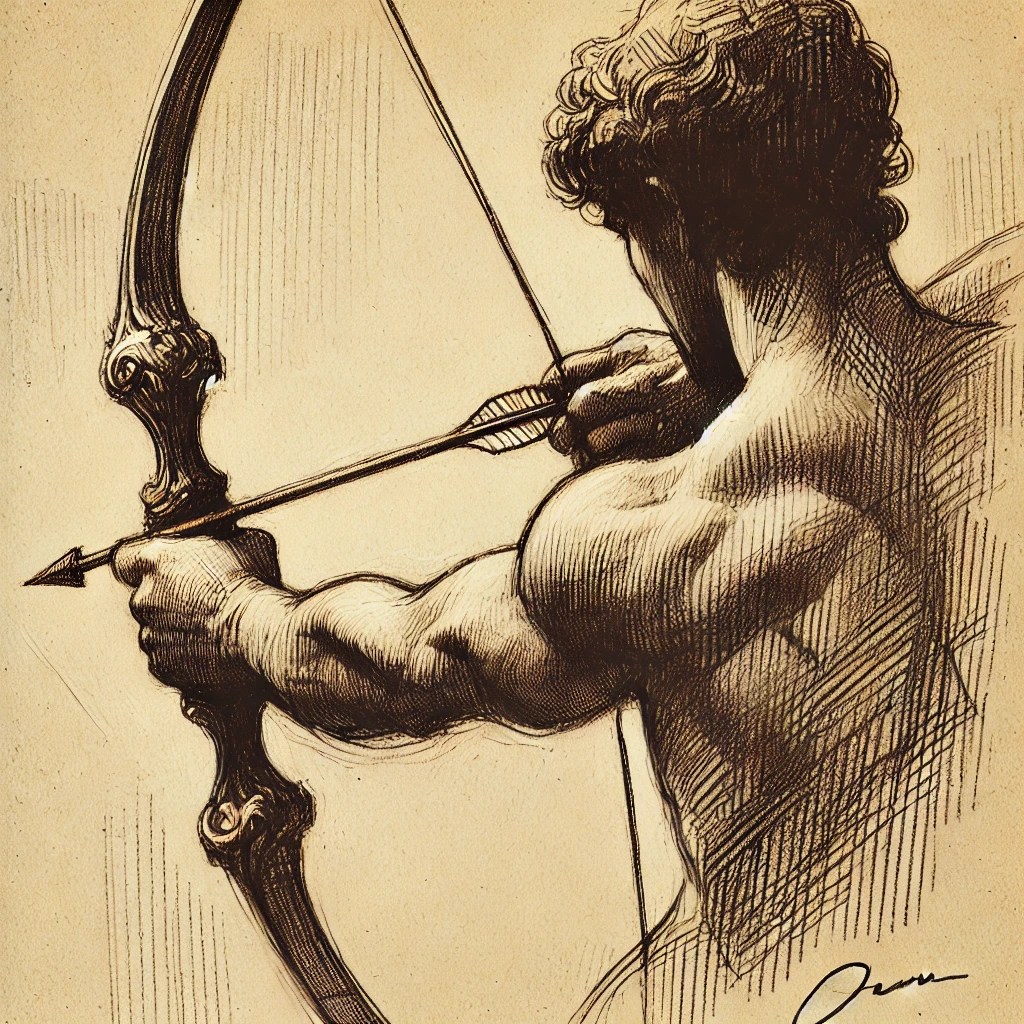
In the wonderful Master and His Emissary, Iain McGilchrist uses the image of a bowstring to illustrate this tension:
"The taut string, its two ends pulling apart under opposing forces, that for bow or lyre is what gives its vital strength or virtue, is the perfect expression of a dynamic, rather than static, equilibrium."
Unreasonable Hospitality is filled with stuff like this. It’s not a heavy lift, yet it’s thought provoking; a taut string indeed. Before reading Unreasonable Hospitality I would not have had the slightest interest in going to a restaurant like EMP. Now, I do, not because Guidara tried to convince me to, but because he helped me see restaurants like EMP in a new way.