Book Review: The Craftsman by Richard Sennett
My grandfather used to say “once a job is first begun, never leave it ‘till it’s done. Be the job great or small, do it right, or not at all.” Grandpa was a craftsman.
Craft has three different meanings in contemporary American language, so far as I can tell. One refers to the etsy, ‘put a bird on it’ type of craftiness. The second is to carefully conceive, as in “she crafted a narrative about the importance of the upcoming fundraiser”. In the third, craft is the skill of making things well. It is the most ancient of the three meanings, and the one that applies to my grandfather. It is also the meaning Richard Sennett uses in his book “The Craftsman”.
Sennett uses the noun “craftsman” to refer to anyone who desires to do a job well for its own sake. In the introduction he emphasizes inclusivity while asking for forbearance in using what may be considered gendered language. That seems reasonable, but here I choose to use the explicitly ungendered term “craftsperson”, except when quoting Sennett.
A craftsperson is not the same as an artist. Craftspeople use skill, commitment, and judgment, as do artists, but a craftsperson is concerned with correctness and practicality in ways that artists are not. “Craft practice is stretched out, art of the original sort is a more immediate event.”
Craft is more than just applying skill. Sennett says a full expression involves the consideration of how and when skill is applied; how to balance practical considerations, quality, and aesthetics.
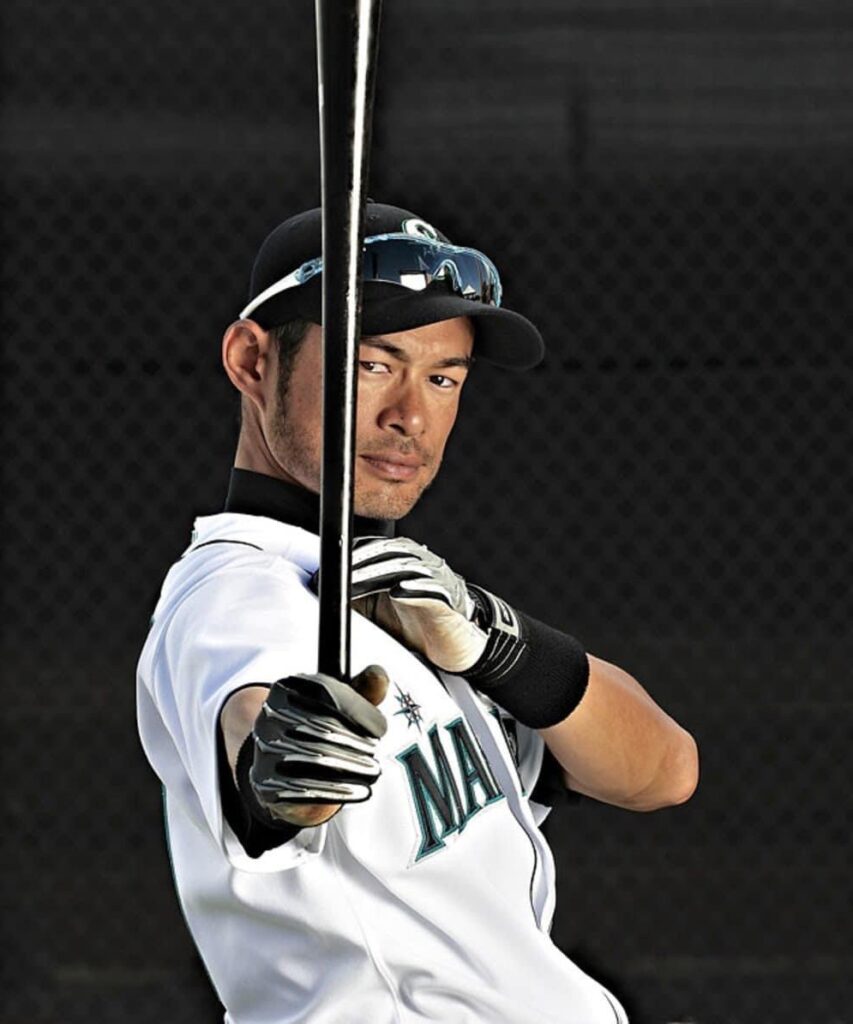
There is beauty in watching a truly skilled individual, but I find that watching a craftsperson at work brings deeper emotional resonance. I am not a huge baseball guy, but Ichiro has long been one of my favorite athletes. Sure, he played with style and skill, but his intention is what captured me. His plate approach was like a meditation. He treated his bats with reverence. His dedication to training bordered on the obsessional. The video Ichiro Suzuki: The Art of Preparation sums it up. This is craft.
Craft involves not just the problem of making something as intended, but deciding what should be made. The beveling of a flange, the position of the handle, the length of the stem, the ordering of arguments to a function, the embeddings of action sequences, the number of heads in a machine learning model. These details are important choices; integral to the craft. Ichiro did not just want to play baseball well. He wanted to perfect a particular form of baseball of his own design.
Should craft be judged by the quality of the result? It would be ridiculous to say otherwise. But it’s complicated. Certainly quality is important. However these days, in many realms machines can produce results far closer to the ‘specification’ than even the most skilled human could ever hope to do. What does that mean for us?
Craft cannot be considered apart from technology, machines, and automation. Do they replace us? Do we fight machines or work with them? Sennett says we should admit straightaway that machines can do things that we cannot. “The enlightened way to use a machine is to judge its powers, fashion its uses, in light of our own limits rather than the machine’s potential. We should not compete against the machine. A machine, like any model, ought to propose rather than command, and humankind should certainly walk away from the command to imitate perfection. Against the claim of perfection we can assert our own individuality, which gives distinctive character to the work we do.” There is still a place for us.
Sennett asserts there is value in our individuality and distinctiveness, though time and again, we fuck it up.
We fuck it up not only during the ~10,000 hours of developing true skill, but also during the exploration-exploitation process of optimizing for our ultimate goal. We fail our way to innovation. Bob Ross told us that there are no mistakes, just happy accidents. Sennett agrees.

What should we make of these happy accidents? Enter another man with enviable hair, the Victorian weirdo John Ruskin. Proust was quite taken with him, and so is Sennett. Ruskin did not agree with Sennett’s views on the relationship between humans and tools. Ruskin “appealed to his readers to scorn the very idea of a mechanical civilization.” Tempting!
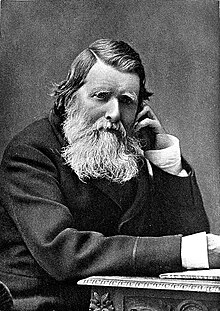
However, Sennett does subscribe to Ruskin’s views on the relationship between control and innovation: “A ‘flamboyant’ worker, exuberant and excited, is willing to risk losing control over his or her work: machines break down when they lose control, whereas people make discoveries, stumble on happy accidents.” Was Bob Ross a Ruskin enthusiast? One wonders.
Mistakes lead to innovation, but only when they aren’t just left on the canvas. Mistakes are thoughtfully integrated into the whole with the end goal in mind. Ruskin: “His is not the path of effortless mastery; he has had troubles, and he has learned from them.” The commitment to persist, adapt, and integrate is essential to the true craftsperson.
Craft involves both commitment over time as well as commitment in the moment. This commitment-in-moment is called focus. A glassblower at work becomes one with the blowpipe and the glass itself: “This stretch-out occurred in two phases. First, she lost awareness of her body making contact with the hot glass and became all-absorbed in the physical material as the end in itself: ‘My awareness of the blowpipe’s weight in my palm receded and in its stead advanced the sensation of the ledge’s edge at the blowpipe’s mid-point followed by the weight of the gathering glass on the blowpipe’s tip, and finally the gather towards a goblet.’” Focus leads to a fusion between maker, tool, and object. Sennett notes “the philosopher Maurice Merleau-Ponty describes what the glassblower experienced as ‘being as a thing’. The philosopher Michael Polanyi calls it ‘focal awareness’”. Some say this kind of awareness is enlightenment itself.

Another term for excessive focus is obsessiveness. Is it bad? Not necessarily. Sennett says obsessiveness is essential for the true craftsperson: “the pursuit of quality entails learning how to use obsessional energy well.”
This obsessive energy is essential for many tasks, as the historian Robert Caro well knows. Perhaps Sennett had his fellow New Yorker in mind when he observed that “rewriting a sentence again and again to get its imagery or rhythm just right requires a certain obsessional energy.” Caro is fond of quoting his first editor, who told him “just remember, turn every page. Never assume anything. Turn every goddamned page.” In Working, Caro says “while I am aware that there is no Truth, no objective truth, no single truth, no truth simple or unsimple, either; no verity, eternal or otherwise; no Truth about anything, there are Facts, objective facts, discernible and verifiable. And the more facts you accumulate, the closer you come to whatever truth there is. And finding facts—through reading documents or through interviewing and re-interviewing—can’t be rushed; it takes time. Truth takes time.” Caro exemplifies obsession in the service of quality. As Sennett says, “this is the crux of obsession: good and not-good-enough had become inseparable. … Obsession expresses a passion for the generic.”
Obsession is risky, even when the aim is predictability. It’s easy to lose sight of a broader perspective; to undervalue activities that may seem impure but server larger objectives. For example, the best mechanics, hair stylists, and coders tend to suck at PR. “The good craftsman is a poor salesman, absorbed in doing something well, unable to explain the value of what he or she is doing.” The context in which a craftsperson works, which in earlier times was often a workshop, offers the possibility of warding off such dangers through community. The collective can provide what the individual cannot.
All in all, The Craftsman is a guided tour of the skill, obsessiveness, and intention that leads to so much of what, in many cases, we take for granted. Sennett himself is a confident and enjoyable guide. His work is a celebration of something distinctively human and serendipitous. I join Sennett in celebrating people like Ichiro, Bob Ross, the glassblower, and Robert Caro, for all of their quirks and obsessiveness.
“Do it right or not at all?” No easy answers.